LOUIS VUITTON DOLOMITES CLASSIC RUN 2026
Louis Vuitton reignites the spirit of the grand tour with the return of its emblematic event that showcases the Art of Travel as envisioned by the House in its purest form, with the Louis Vuitton Dolomites Classic Run 2026, from September 1st to 4th. An exclusive journey where refined excellence, performance, and the Art of Travel meet once again on the road: a new chapter where the House brings its legendary heritage of savoir-faire to the Classic Car world.
The Louis Vuitton Classic Run has been a long-standing tradition for the House since 1993, covering challenging routes: the lush Malaysian jungle and rubber plantations in the 1993 Louis Vuitton Vintage Equator Run, the vineyards and historic towns of Tuscany in the 1995 and 1997 Italia Classica, the rice paddies and mountains from Dalian to Beijing in the memorable 1998 Louis Vuitton Classic China Run, and the ancient oak forests of Bohemia in the 2006 Louis Vuitton Boheme Run from Budapest to Prague via Vienna.
The last Classic Run, the Louis Vuitton Classic Serenissima Run in 2012 ended in Venice, exactly where the Louis Vuitton Dolomites Classic Run 2026 starts in September.
Along the way, the House pays tribute not only to the golden age of motoring, but also to the artistic and architectural heritage of Italy through collaborations with historic villas, museums and cultural institutions. At once sporting event, cultural journey and expression of craftsmanship, the Louis Vuitton Dolomites Classic Run 2026 reaffirms the House’s vision of travel as an art form. Thus, Louis Vuitton collaborates with leading cultural institutions, foundations, historic villas and castles, including Villa Reale di Monza, the Castello Sforzesco in Milan, Villa Pisani in Stra and the MUVE-Musei Civici di Venezia, to support the preservation and enhancement of cultural heritage.
The connection between Louis Vuitton and the automotive world runs deep. The first Auto Trunk was created by Georges Vuitton, son of Louis, in 1897, replacing the bulky trunks of the era with a flat-topped design and marking a new chapter in travel. The Sacs Chauffeurs followed in 1905, featuring a perfectly round shape to fit directly into the well of a car's spare wheel. From handcrafted trunks designed for early explorers and drivers to the adrenaline and precision of contemporary racing, the event bridges generations of research, evolution, and creativity.
LOUIS VUITTON DOLOMITES CLASSIC RUN 2026 The Louis Vuitton Dolomites Classic Run 2026 will unfold in a four-day experience, across a route of approximately 600 kilometers, filled with art and discovery, bringing together 22 exceptional vintage cars from the world's most prestigious collections, whose passionate owners, including women collectors, will compete in a regularity race. These magnificent machines represent the absolute pinnacle of mid-20th-century engineering—each automobile selected not merely for its rarity, but as a bridge between engineering excellence and the living heritage of the Louis Vuitton Art of Travel.
Commanding this fleet are elite drivers and passionate connoisseurs who approach the open road with the same rigorous spirit of adventure that defined the early pioneers of travel. Rather than a sprint, the pilots will engage in a regularity race, where victory demands absolute synchronization between driver, machine, and time, requiring meticulous navigation across the majestic landscapes of the Italian Alps.
Through initiatives ranging from artwork conservation to museum restoration projects, the House contributes to safeguarding these historic landmarks and ensuring that their invaluable legacy is preserved and passed on to future generations.
The event will start at the Villa Pisani, universally known as the “Queen of Venetian Villas” and will end up in Monza, home to the legendary Temple of Speed, where on September 4th the participating cars will parade on the iconic Autodromo Nazionale di Monza circuit during the opening of Formula 1 Italian Grand Prix™, where legacy of classic motoring meets the pinnacle of highly engineered performance.
September 1st - Venice: the event will start in Venice, showcasing majestic settings of selected locations and mirroring the same values that have shaped Louis Vuitton since its foundation: timelessness, creativity, and unique savoir-faire.
September 2nd – From Stra to Dolomites: the race will depart from one of the most enchanting historic residences of the Venetian mainland, Villa Pisani in Stra, along the Riviera del Brenta. From Villa Pisani, the competition will unfold through the spectacular scenery of the Dolomites, a UNESCO World Heritage landscape. The route, shaped as a tribute to Louis Vuitton's "Art of Travel", will take participants through dramatic mountain passes, winding roads, and cinematic scenery.
September 3rd – From Dolomites to Monza: the journey continues as the landscape gives way to the legacy of motorsport. An engaging day on the road will lead the race to Monza, home to the legendary Temple of Speed and one of the oldest Formula One circuits in the world, where the cars will reach the finish line.
September 4 - Monza & Milan: the cars will parade on the iconic Autodromo Nazionale di Monza circuit where the legacy of classic motoring meets the pinnacle of highly engineered performance. The Louis Vuitton Dolomites Classic Run 2026 will then culminate at Milan's Castello Sforzesco, which will host the award ceremony where the trophies will be presented to the winner
THE RULES Unlike traditional races, regularity races are not determined by speed: crews, comprising of a driver and a navigator, are judged on precision and timing. The fewer penalty points a crew rack up, the higher they finish. For this event, a few bonus games will be added for some extra fun. Regularity Tests The heart of the competition: short, timed sections where crews must drive at a preset target speed as accurately as possible.
Timing is measured to a hundredth of a second using a rubber hose called a “road tube” laid across the road that, when driven over by a car, triggers a signal through a device called a “pressostat” to the timing equipment. The winners will be those that come closest to the exact target time at every single point. Speed Test A speed test is a longer section where crews must maintain a set average speed from start to finish. The section begins with either a road tube or a traffic-light signal, and a timekeeper notes each car's exact start time.
Hidden checkpoints are scattered along the route (unknown to the drivers) to time each car as it passes, so the crew's actual average speed can be compared to the target. Time Controls Time controls are checkpoints that record the arrival time of each car. Missing the cut-off time will result in a penalty that could sends the crew to the bottom of the standings while keeping them in the competition. Photo Safari Everyday, the teams will be requested to find hidden objects. For every object correctly identified, the crew will be awarded points. In the case they spot all the cards handed out that day for an extra bonus points per day will be assigned. Beauty in Motion The event will also feature a Beauty in Motion Car contest, where each car will be judged during the race by a Jury of experts. Precision beats speed, and every crew should cross the finish line, one way or another.
THE CARS
Bentley 8 Litre Vanden Plas Two-Seater Drophead (1931) Commissioned in 1931 by the 22-year-old Lord Brougham & Vaux, the original one-off Vanden Plas two-seater drophead was one of the most striking interpretations of W.O. Bentley’s 8 Litre. Its lost coachwork has been painstakingly recreated from the few surviving period photographs, bringing this remarkable piece of Bentley history back to life.
ALFA ROMEO 6C 1750 GS SPYDER ZAGATO-APRILE (1931) Originally built as a supercharged Zagato-bodied sports car, this Alfa Romeo enjoyed an active early competition life before being reimagined in 1938 by coach-builder Giuseppe Aprile. The result is a unique fusion of racing pedigree and aerodynamic design, transforming an already significant Alfa Romeo into a true one-off.
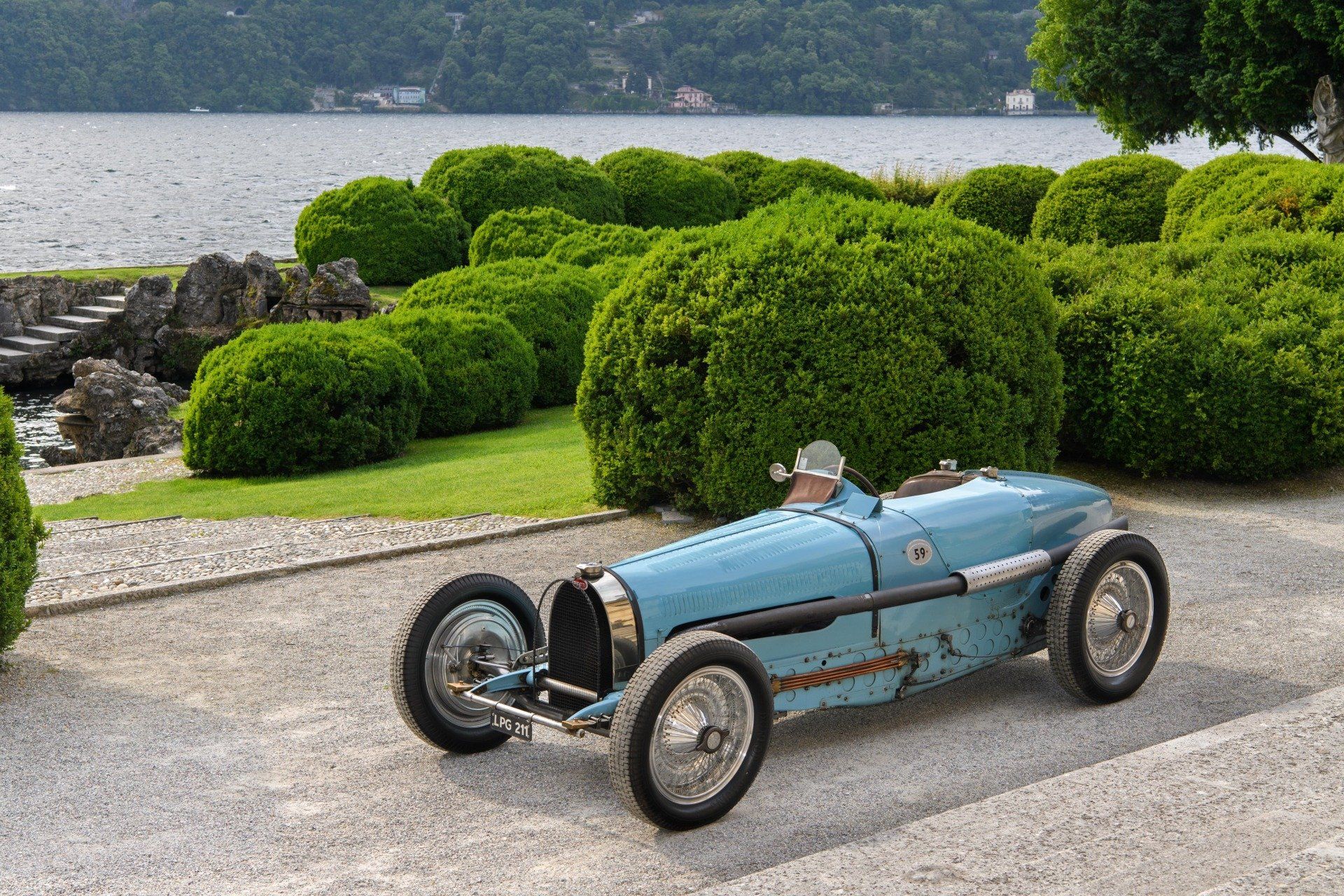
BUGATTI TYPE 51 GRAND PRIX (1931) Introduced in 1931 as the successor to the legendary Type 35, the Bugatti Type 51 represented the next evolution of one of the most successful Grand Prix racing cars of its era. It retained the lightweight construction and distinctive proportions of its predecessor while introducing a new twin-cam, supercharged 2.3-litre straight-eight engine. Created expressly for Grand Prix competition, the Type 51 became a winner at the highest level of international motorsport.
One of its most celebrated victories came at Monaco in 1933, when Achille Varzi and Tazio Nuvolari fought an extraordinary race-long battle, repeatedly exchanging the lead before Varzi took victory for Bugatti. More than nine decades later, the Type 51 remains one of the defining competition Bugattis, combining advanced engineering with the elegance for which the marque became renowned.
MERCEDES-BENZ 380 SPECIAL ROADSTER ERDMANN & ROSSI (1933) This model was commissioned by Prince Max zu Schaumburg-Lippe and built on a Mercedes-Benz 380 chassis, featuring a lightweight aluminium body crafted by Erdmann & Rossi. In 1934, Prince Max drove the car to a class victory in the 2,000 km Deutschland Fahrt. The car was later restored using original materials to recreate numerous authentic details, making it one of the most significant pre-war Mercedes-Benz sporting roadsters.
LAGONDA LG45 RAPIDE (1937) The LG45 Rapide continues W.O. Bentley's story after leaving the company that bore his name to join Lagonda. This car was far from its British origins. Travelling from Glasgow to Argentina before World War II, it was raced and won a Best-Looking Car award in 1950. After its restoration, it now carries its remarkable story as part of a Swiss private collection.
ASTON MARTIN C-TYPE SPEED MODEL ROADSTER BERTELLI (1939) Nicknamed The Flying Pea, this streamlined Aston Martin belonged to a period when aerodynamics reshaped the future of motoring. One of eight C-Type Speed Models built, it competed in the 1939 RAC Rally and was at Le Mans before the outbreak of World War II brought international motor racing to a halt.
ASTON MARTIN LAGONDA DP115 (1954) Created during David Brown's ownership of both Aston Martin and Lagonda, and one of just three examples, it was made for international sports car racing at a time when Aston Martin was exploring multiple routes to Le Mans success. DP115 represents a path not taken, an ambitious project that survives as a reminder of the marque's pursuit of performance during the 1950s.
MERCEDES-BENZ 300 SL GULLWING (1954) This early 300 SL Gullwing made its public debut at the 1954 London Motor Show, where it was purchased by racing team owner Rob Walker. Retaining its original UK registration, RGO 30, the car spent nearly two decades in storage on a Sussex apple farm before undergoing a meticulous restoration. Today, it is an authentic survivor from the earliest chapter of the Gullwing story.
FERRARI 750 MONZA (1955) The Ferrari 750 Monza is one of just 32 examples built, delivered new to Count Luigi "Lulu" Bordonaro di Chiaramonte. It enjoyed an extensive competition career, including victories at the Corsa al Monte Pellegrino hillclimb. Today, it continues to compete in the world's most prestigious historic events, like the Mille Miglia and Le Mans Classic.
FERRARI 250 GT ZAGATO (1956) Commissioned by Italian gentleman driver Vladimiro Galluzzi, the Ferrari 250 GT was the first to receive Zagato's coachwork. It took part in concourses of elegance around the world, like the Hans Tanner Trophy, and the Louis Vuitton Classic Serenissima Run in 2012. Recently, it competed in the Mille Miglia, which earned it a feature in Michael Mann's film Ferrari, symbolizing the enduring appeal of Ferrari's golden.
FERRARI 500 TR SPYDER SCAGLIETTI (1956) The very first car named Testa Rossa, "red head", a reference to the engine's red cam covers. Developed for sports car racing, the 500 TR paired Aurelio Lampredi's four-cylinder engine with lightweight Scaglietti coachwork. While Ferrari's V12 were becoming legendary, the 500 TR proved that a smaller four-cylinder engine could still deliver extraordinary success on the track.
LANCIA AURELIA B24 S CONVERTIBLE (1958) Immortalized in Dino Risi’s film Il Sorpasso, the Lancia Aurelia B24 embodied the optimism, style and freedom of a country rediscovering itself. With elegant Pinin Farina coachwork and the world’s first production V6 engine, the Aurelia became a symbol of Italy’s golden age and remains one of the most evocative sports cars ever created.
FERRARI 250 GT LWB SPYDER CALIFORNIA (1958) Few Ferraris captured the glamour of the French Riviera quite like the California. This example, one of just fifty long-wheelbase California built, became a familiar sight on the Cote d'Azur during the Riviera's golden age. More than sixty years later, it remains an enduring symbol of elegance, freedom and optimism.
FERRARI 250 GT SWB SPYDER CALIFORNIA SCAGLIETTI (1961) Chassis 2175GT is one of the finest examples of Ferrari's legendary 250 GT SWB California. Completed in January 1961, it was specified with covered headlights, velocity stacks and Scaglietti coachwork, making it one of the most desirable examples of the model. Ferrari Classiche certified that it remains one of the defining California Spyders of its generation.
FERRARI 400 SUPERAMERICA (1961) One of 35 examples of the brand’s flagship grand tourer and the last Ferrari to be offered with fully bespoke coachwork. It was designed for a select group of clients who expected the finest motor-car money could buy. A former Best of Show winner at the Cavallino Classic and later a Platinum Award recipient, this example is the most celebrated Ferrari of its generation.
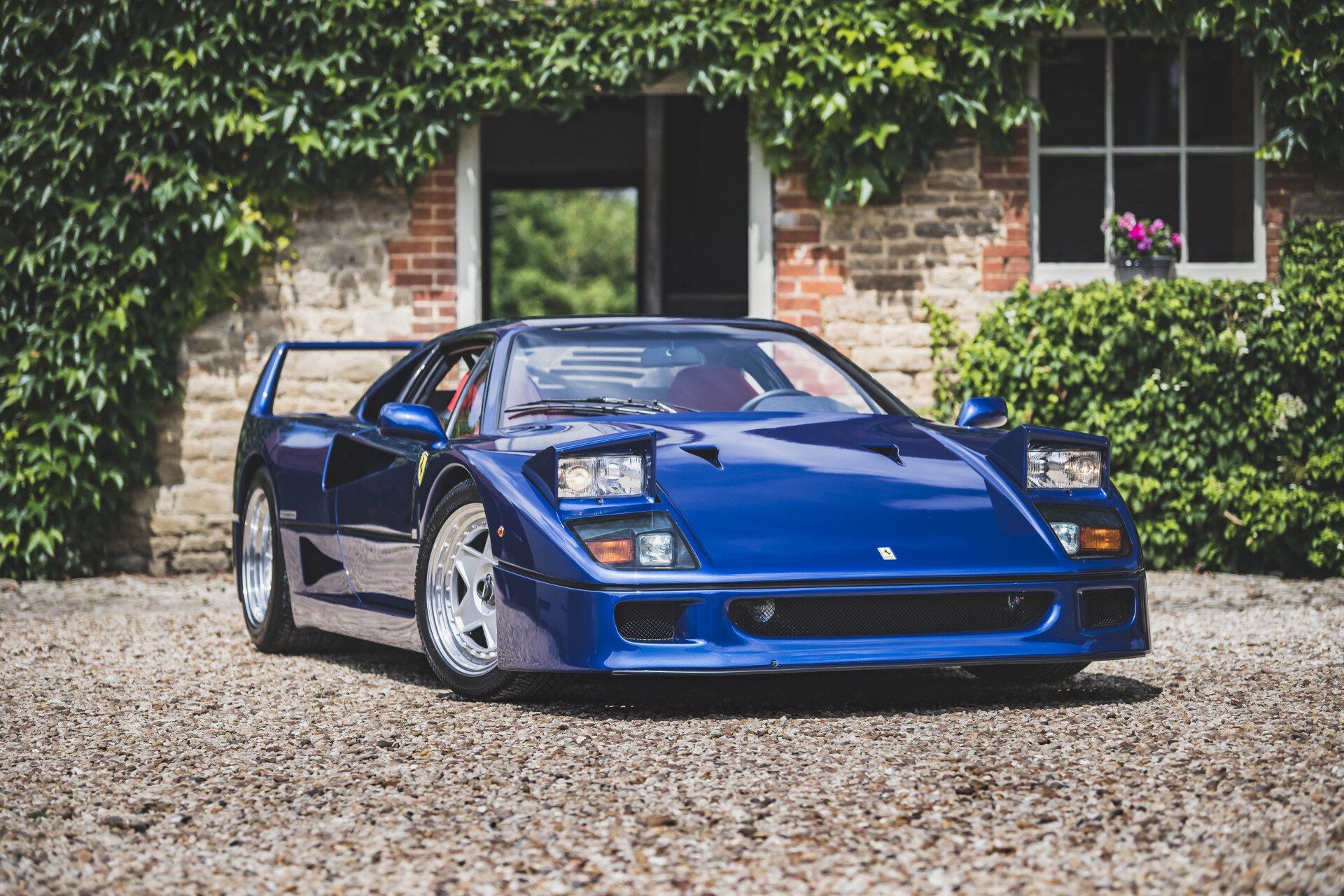
FERRARI 275 GTB ALLOY (1965) Built in October 1965, chassis 07971 is a rare alloy-bodied Ferrari 275 GTB, originally finished in Salehi Blue and delivered new in Venezuela. Restored to its original specification, it received both a Platinum Award and Best in Class in The V12s of the Dolce Vita category at the 2026 Cavallino Classic Modena.
FERRARI 275 GTB COMPETIZIONE (1965) Delivered to Florentine gentleman driver Carlo Benelli, also known as Riccardone, this rare Ferrari 275 GTB actively competed in its time, racing in the 1967 1000 Kilometres of Monza, finishing 15th, with Carlo Benelli and "Nanni" Galli at the wheel. In a striking shade of metallic Verde Bosco, it combines competition pedigree with true individuality. More recently, it has been recognised at some of the world's most prestigious concours events, including Cavallino Classic Modena and Villa d'Este.
FERRARI 275 GTB4 (1967) The 275 GTB4 is one of only six built in a rare combination of Rosso Rubino with beige interiors and corduroy seat inserts. It retains its original leather interior, chrome trim and matching-numbers drivetrain, as confirmed by Ferrari Classiche certification. With just five owners in fifty years and low mileage, this is one of Maranello's most celebrated grand tourers.
MASERATI GHIBLI SPYDER (1968) When Maserati unveiled the Ghibli Spyder in 1969, it created one of Italy's most elegant open grand tourers. Penned by Giorgetto Giugiaro, its crisp, understated styling and effortless V8 performance made it one of the marque's most desirable road cars. The Ghibli Spyder remains one of Maserati's rarest and most celebrated creations, as only 125 of them were produced.
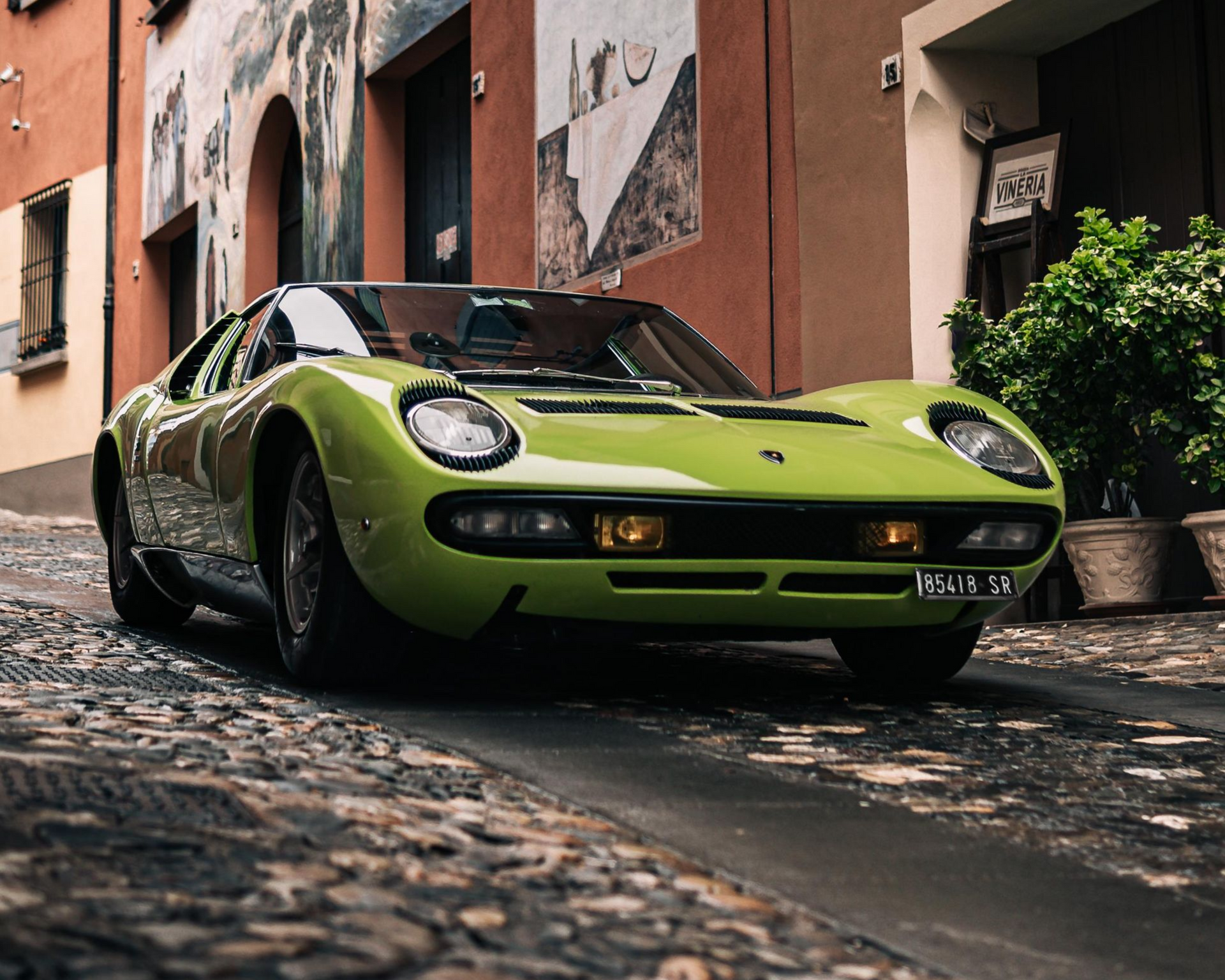
LAMBORGHINI MIURA P400 (1968) The radical Miura became a timeless template after being unveiled in 1966. This example, chassis 3586, achieved a different kind of immortality when it starred in the opening sequence of The Italian Job. This historic scene in the Italian Alps helped cement the Miura's status as a cultural icon, after which it was authenticated and restored by Lamborghini Polo Storico.
FERRARI 365 GTS (1969) Produced in just 20 examples, the Ferrari 365 GTS was one of the rarest open grand tourers ever built by Maranello. Combining elegant Pininfarina styling with Ferrari's 4.4-litre Colombo V12, it has become one of the marque's most exclusive and understated road cars.
FERRARI 365 GTS4 DAYTONA SPYDER PROTOTYPE (1969) Chassis 12851 is the prototype Ferrari Daytona Spyder, the first of 26 European-specification cars built and the only with Plexiglass-covered headlamps. Presented at the 1969 Frankfurt Motor Show and the Paris Salon, it introduced what would become one of Ferrari's most coveted open-top grand tourers. Today it remains one of the most recognizable Daytona Spyders created
LOUIS VUITTON AND CULTURAL HERITAGE Louis Vuitton collaborates with leading Italian cultural institutions that will be present along the route of the Dolomites Classic Run 2026, supporting the preservation of some of Italy's most exceptional landmarks. Villa Pisani - The House is supporting, in collaboration with Venetian Heritage Foundation the refurbishment and the new lighting system installation of the Sala di Bacco, a unique 18th-century room devoted to musical performances, exquisitely decorated by Jacopo Guarana.
The Dolomites Classic Run will offer the possibility to the public to admire the new set up of the Sala di Bacco and the car exhibition on September 1st. Villa Pisani will be exceptionally open to public free of charge until 10 pm. Palazzo Ducale - Louis Vuitton has built a long-lasting partnership with Fondazione MUVE (Musei Civici di Venezia), through which more than 200 artworks from the collections of the 13 Museums part of Muve have been restored and returned to the city since 2013.
This relationship will be celebrated during the opening night of the Louis Vuitton Dolomites Classic Run, where the trophy unveiling will take place in the incredible setting of Palazzo Ducale. Reggia di Monza - Louis Vuitton will support the restoration of the historic clock and the façade of the southwest wing of the main building: Villa Reale. Located within the Parco di Monza, the Villa Reale, once the royal residence of Queen Margherita di Savoia, will host the exhibition of the participating classic cars from September 3rd to 6th. Castello Sforzesco, Sala delle Asse, Milan - Commissioned to Leonardo da Vinci by Ludovico Maria Sforza in 1498, the Sala delle Asse houses the renowned Monocromo: the only existing mural painting by Leonardo's own hand alongside the Last Supper at Santa Maria delle Grazie. Louis Vuitton is supporting the ongoing restoration of the room by curating the reinstallation of the museum exhibition and its lighting system, set to be completed in 2027.
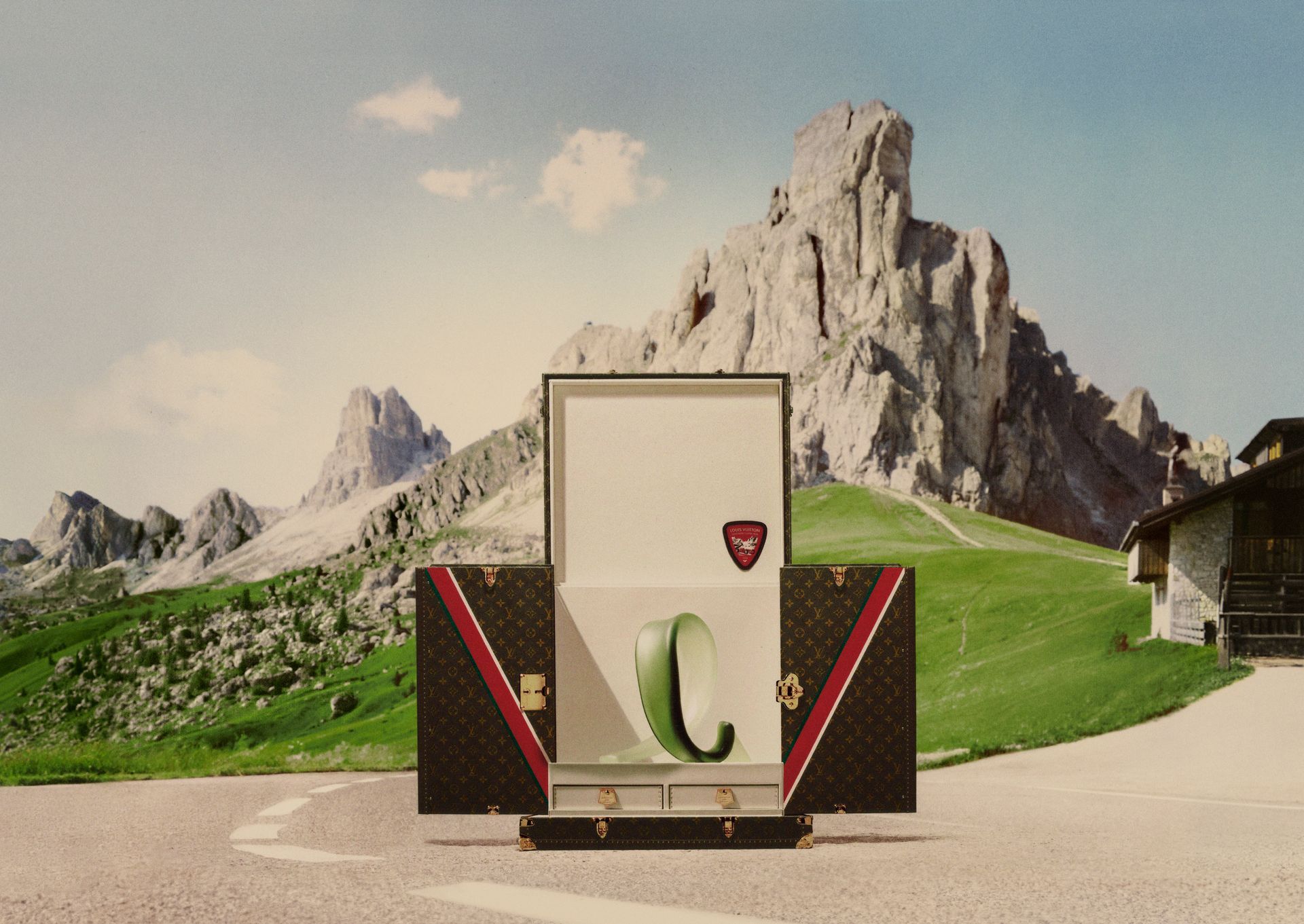
THE TROPHY & LOUIS VUITTON TROPHY TRUNK: Victory Travels in Louis Vuitton With the return of the Louis Vuitton Dolomites Classic Run in 2026, Louis Vuitton reaffirms its status as the ultimate guardian of sporting excellence. The House has a multi-decade tradition of creating bespoke Trophy Trunks, designed to protect and transport the world’s most coveted awards. From the historic FIFA WORLD CUP™ and the Ballon d’Or® to the America’s Cup and the NBA’s Larry O'Brien Trophy™, as well as the tennis world, crafting Trophy Trunks for Roland-Garros, Davis Cup, and Australian Open, Louis Vuitton has become synonymous with champion status. For the Louis Vuitton Dolomites Classic Run 2026, the trophy was specifically commissioned to Sabine Marcelis and produced by the highly prestigious Italian art glass maison Venini Hause.
The trophy is to be unveiled in Venice and will travel in a Louis Vuitton Trophy Trunk, celebrating the highest savoir-faire and another landmark in Louis Vuitton’s long history of creating bespoke Trophy Trunks for the world’s most iconic trophies since 1988. Imbued with emotion, these adventures continue to mark new milestones in the House’s history, an ongoing testament that “Victory Travels in Louis Vuitton” and that excellence in sports is echoed in the values of Louis Vuitton.
LOUIS VUITTON AND THE AUTOMOTIVE WORLD The history of Louis Vuitton is deeplyeve intertwined with the evolution of the automotive industry from its very beginnings, introducing a new concept of the Art of Travel. While the earliest trunks produced in the Paris headquarters (since 1854) and in the Asnières ateliers (since 1859) reflected the typical features of the time - rounded lids and iron reinforcements - Louis Vuitton reimagined in 1860 the very concept of the trunk, introducing flat-topped models covered in Trianon grey canvas. Elegant, light, stackable, and innovative, the design matched the visionary mindset shared by Louis Vuitton and the pioneering motorcar producers, transforming the functional need of vehicle packing into an ultimate expression of refinement and savoir-faire. Celebrated with a bronze medal at the 1867 Paris Universal Exhibition, where Louis Vuitton was registered as a "packer and manufacturer of travel trunks", his patented creations attracted, for the first time, high-profile cosmopolitan clients.
At the turn of the century, under the direction of Louis Vuitton’s son, Georges, the House expanded its vision even further, creating automobile trunks that were engineered to fit perfectly on the roofs, running boards, or rear decks of early motorcars. These custom-made trunks were designed to be dust-proof, waterproof, and aerodynamic, as well as spacious enough to contain anything: from bespoke picnic sets and wardrobes to specialised cases for spare tires. A relentless search was conducted on the materials: the Damier canvas was introduced in 1888, followed by the iconic Monogram in 1896 and the revolutionary coated canvas that made fabrics durable, waterproof, and washable. Ideal for automobile luggage, it was named “Vuittonite” in 1903.
Among the legendary trunks introduced in these early years were the Auto Trunk (1897), specifically engineered to withstand extreme conditions of open-air road travel; the Sacs Chauffeur (1905), a circular, central-locking trunk engineered to fit perfectly within the empty space of a vehicle's spare tire rim; the Excelsior Trunk (1906), designed as an ingenious outer shell attached to the rear of the vehicle, that seamlessly protected three independent, removable travel suitcases from outdoor elements; the Roof Trunk (1910), tailor-made to match the exact curvature of specific car rooflines. The House naturally became the perfect partner for pioneering incredible races like the 1908 grueling New York to Paris Race: an extreme 34,000-kilometre endurance run that spanned three continents. For nearly two decades, the House extended its influence beyond car competitions, hosting the world's most prestigious automotive accolades.
Two key events are the Louis Vuitton Classic Award, presented to the automobile awarded "Best of Show" at one of the world's most prestigious concours d'élégance, such as Italy's Concorso d'Eleganza Villa d'Este or California's Pebble Beach Concours d'Elegance, and the Louis Vuitton Concept Award, recognising the year's most outstanding prototype. Both awards were introduced in 2005, reflecting the House's commitment to celebrating both the heritage and the future of automotive excellence.
THE NEW ERA OF SPEED: LOUIS VUITTON AND FORMULA 1® First announced in 2024, and launched for the 2025 Grand Prix season, LVMH has entered a landmark, 10-year global sponsorship agreement with Formula 1®, an unprecedented partnership with Louis Vuitton taking centre stage to redefine sport engagement and trackside elegance.
While the global partnership officially commenced in 2025 to coincide with Formula 1® ‘s 75th anniversary, the roots between the two entities run deep. Moët & Chandon pioneered the podium champagne tradition in 1966 and TAG Heuer has served as a trusted timekeeper for decades. As for Louis Vuitton, the House began creating Trophy Trunks for the Monaco Grand Prix in 2021. Produced in the historic workshops in Asnières-sur-Seine, hand-painted and tailored for each iconic race, the trunks embody the House's long-held philosophy: “Victory Travels in Louis Vuitton.”
As part of this partnership, Louis Vuitton’s savoir-faire and creative vision is now woven into the world of Formula 1®: from bespoke hospitality initiatives to landmark events such as the Louis Vuitton Dolomites Classic Run, which will culminate at the Monza “Temple of Speed” during the opening of the 2026 Formula 1® Gran Premio d’Italia. When signing the 10-year agreement, Louis Vuitton committed to creating bespoke Trophy Trunks for every Grand Prix, each bearing the signature "V" for Victory formed on Monogram canvas, a nod to the circuit's finish line, celebrating the adrenaline, prestige and ultimate triumph of motorsport's elite championship.
Where sport meets entertainment, Louis Vuitton adds its own unique touch, proving to be increasingly appealing not only to its traditional audience but also to a younger, fast-growing and highly diverse Formula 1® audience. From the custom trunks of the early 1900s to the podiums of contemporary Formula 1®, Louis Vuitton remains a driving force in celebrating the culture, elegance, and adrenaline of the automotive world.

Read More:

































































































































Just a few of the brands we work with